
The Quickest Way to Stop Killing Your Succulents
The best soil type for succulents is a fast-draining, gritty mix made up of 50–70% inorganic mineral material (like pumice, perlite, or coarse sand) blended with 30–50% organic matter (like coconut coir or pine bark).
Here’s a quick-reference guide to get you started:
| Soil Type | Good for Succulents? | Why |
|---|---|---|
| Gritty succulent mix (50-70% mineral) | ✅ Yes | Drains fast, prevents rot |
| Standard potting soil (amended) | ⚠️ With modifications | Add pumice or perlite at 1:1 or 1:2 ratio |
| Regular potting soil (unmodified) | ❌ No | Retains too much moisture |
| Cactus mix (high peat content) | ❌ No | Peat goes hydrophobic when dry |
| Garden soil | ❌ No | Compacts, drains poorly, may carry pests |
The simplest DIY recipe: mix 1 part organic material with 2 parts coarse mineral grit.
Improper soil is behind a staggering 75% of succulent failures in the first year. That’s not a watering problem — it’s a foundation problem.
Succulents evolved in rocky, sandy, arid environments. Their roots are built to dry out quickly between waterings. When they sit in dense, moisture-holding soil, root rot sets in fast. Studies suggest up to 70% of succulents potted in the wrong medium develop root rot.
The good news? Switching to the right soil mix alone can boost survival rates by up to 85%. It’s the single biggest thing you can do for your plants.

Why Your Plant Needs the Best Soil Type for Succulents
To understand why succulents are so “picky” about their dirt, we have to look at their ancestors. Most succulents are xerophytes—plants adapted to survive in environments with very little liquid water. They are native to arid regions where the ground is often more rock and sand than actual “soil.”
In these habitats, rain is infrequent but often comes in heavy bursts. The ground is naturally porous, allowing water to rush past the roots and vanish into the deeper earth. Succulents adapted by developing thick, fleshy leaves and stems to store that water for the long haul. Because they carry their own water supply, their roots don’t need to—and actually cannot—sit in damp conditions.
Using regular potting soil for a succulent is like asking a desert lizard to live in a swamp. Standard potting mixes are designed to hold onto moisture for as long as possible to help thirsty plants like ferns or begonias. For a succulent, this creates a “death trap” of soggy roots. When roots are surrounded by water for too long, they can’t breathe. This lack of oxygen leads to tissue death, which attracts anaerobic bacteria and fungi. This is the recipe for root rot, a silent killer that can affect up to 70% of plants in the wrong medium.
If you are growing indoors, the stakes are even higher. Indoor environments typically have less airflow and lower light than the great outdoors, meaning soil stays wet even longer. For more tailored advice on choosing the right foundation for your home greenery, check out our indoor-garden-soil-recommendations.
Essential Characteristics: Drainage, Aeration, and Texture
When we talk about the best soil type for succulents, we are looking for three main things: drainage, aeration, and texture.
Drainage is the speed at which water moves through the pot. In a perfect mix, water should start running out of the bottom holes almost as soon as you pour it on top. Aeration refers to the tiny air pockets within the soil. Roots need oxygen to perform cellular respiration; without these pockets, the roots literally suffocate. Finally, texture describes the physical “feel” of the soil. Succulent soil should feel gritty, grainy, and loose—never soft, spongy, or heavy.
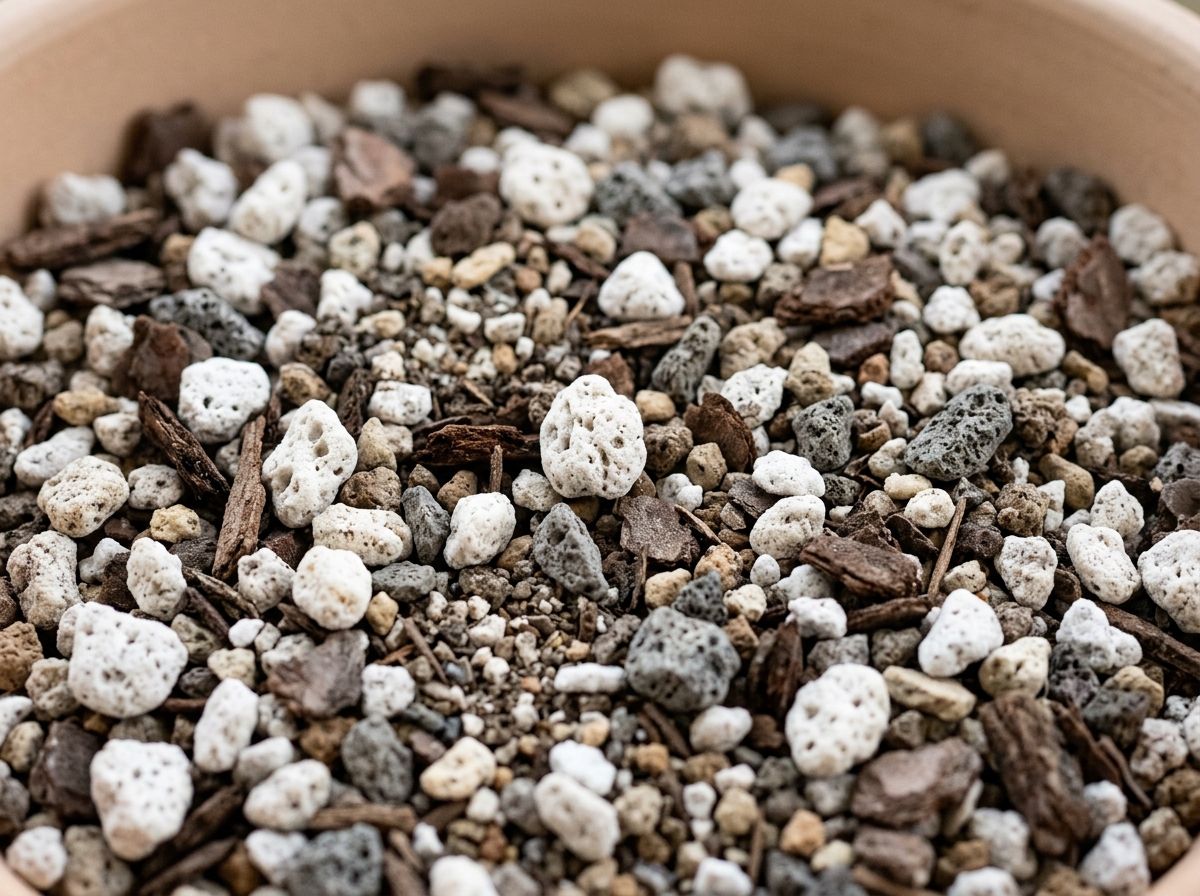
Ideally, the particle size for your mineral components should be between 1/8″ and 1/4″ in diameter. If the particles are too fine (like play sand), they pack together and block drainage. If they are too large, they won’t provide enough surface area for the roots to anchor.
Beyond physics, there is chemistry. Succulents prefer a slightly acidic environment, with a pH between 6.0 and 7.0. Most commercial mixes land in this range, but if your soil is too alkaline (above 7.0), your plant might struggle to take up essential nutrients.
Mineral Components for the Best Soil Type for Succulents
The “gritty” part of your soil is made of minerals. These are the lifeblood of succulent health because they don’t break down quickly and they don’t hold much water.
- Pumice: Many experts consider this the “gold standard.” It’s a volcanic rock that is incredibly porous. It provides excellent aeration and can retain trace minerals (up to 70 different types!) that help your plant grow. Best of all, it’s heavy enough not to float to the top when you water.
- Perlite: These look like little white styrofoam balls but are actually heated volcanic glass. They are cheap and easy to find. While they provide great drainage, they are very light and tend to float to the surface over time, which can be messy.
- Coarse Sand: We’re talking about “builder’s sand” or “horticultural sand.” Avoid play sand or beach sand, as these are too fine and can contain salts that harm plants.
- Volcanic Rock/Scoria: Similar to pumice but usually red or black. It’s excellent for creating large air gaps in the mix.
For most succulents, these minerals should make up 50-70% of your total mix. If you have a particularly rot-prone plant, like a desert cactus, you might even go up to 80% minerals.
Organic Components and Finding the Best Soil Type for Succulents
While minerals provide the structure, organic components provide the nutrients and just enough moisture to keep the plant hydrated. However, we want to keep this to a modest 30-50% ratio.
- Coconut Coir: This is the fibrous byproduct of coconut husks. It is a fantastic alternative to peat moss because it is more sustainable and rehydrates much more easily. To dive deeper into why this might be your plant’s new best friend, see is-coco-peat-for-succulents-the-secret-to-happy-plants.
- Pine Bark Fines: These provide some acidity and create nice “chunky” air pockets.
- Compost: Use this sparingly. It’s nutrient-dense but can become heavy and water-retentive if you use too much.
| Component Type | Function | Examples |
|---|---|---|
| Inorganic (Mineral) | Drainage, Aeration, Structure | Pumice, Perlite, Coarse Sand, Gravel |
| Organic | Nutrient Delivery, Moisture Retention | Coconut Coir, Pine Bark, Compost |
DIY Mixing vs. Commercial Blends
Should you buy a bag at the store or channel your inner scientist and mix your own? Both have pros and cons.
Commercial Blends: These are convenient. However, many “Big Box” cactus mixes are still too heavy on peat moss. If you buy a commercial mix, look at the bag. Does it look like dark, fluffy dirt? If so, you should probably amend it. A high-quality commercial mix like Bonsai Jack is often “ready to go” but can be significantly more expensive. When buying, look for visible grit—you should see the white perlite or grey pumice clearly. Avoid anything with “moisture-retaining crystals” or vermiculite, as these are designed to keep soil wet.
DIY Mixing: This is often the most cost-effective and healthy choice for your plants. It allows you to customize the mix based on your specific environment. A basic, reliable recipe is:
- 2 parts coarse sand or pumice
- 2 parts potting soil (or coconut coir)
- 1 part perlite
Mixing your own soil is a “rite of passage” for succulent lovers. It ensures transparency—you know exactly what is touching your plant’s roots.
How Pot Choice and Environment Influence Soil Needs
The container you choose is just as important as the dirt inside it. Think of the pot and soil as a single system.
Terracotta and Unglazed Clay: These are porous. They actually “breathe,” allowing water to evaporate through the walls of the pot. This is great for beginners because it helps the soil dry out faster. If you use terracotta, you can get away with a slightly more organic soil mix. Plastic and Glazed Ceramic: These hold onto moisture. Because water can only escape through the top or the drainage hole, the soil stays wet longer. If you love the look of a glazed pot, you must use a grittier soil mix (more minerals) to compensate for the lack of evaporation.
The Golden Rule of Pots: Always, always use a pot with a drainage hole. Without one, water pools at the bottom, creating a stagnant pool that breeds bacteria. Some people suggest putting a layer of rocks at the bottom of a hole-less pot, but research shows this actually raises the water table and makes rot more likely.
Environment Matters:
- Indoors: Low airflow means you need more grit (pumice/perlite) to help the soil dry within 1-3 days.
- Outdoors: In hot, windy climates, soil dries rapidly. You might need a bit more organic matter (coir) to keep the plant from shriveling.
- Landscaping: If planting in the ground, avoid heavy clay. We recommend mounding the soil into “berms” or raised beds to ensure gravity pulls the water away from the plant’s base.
Troubleshooting Common Soil-Related Problems
Even with the best soil type for succulents, issues can arise over time.
Soil Compaction: Over a year or two, organic matter breaks down and settles, squeezing out the air pockets. If you notice water sitting on top of the soil for a long time before soaking in, your soil is likely compacted. The solution? Repot with fresh, gritty mix. Most succulents benefit from a soil refresh every 2-4 years.
Hydrophobicity: This usually happens with peat-based soils. When peat dries out completely, it actually starts to repel water. You’ll pour water in, and it will run down the sides of the pot and out the bottom without ever soaking the root ball. If this happens, you may need to “bottom water” by soaking the pot in a tub of water for 20 minutes to force the peat to rehydrate.
Nutrient Overload: Succulents are slow growers. If you use a soil with too much fertilizer or compost, the plant may grow “leggy” or stretched (etiolated) and become weak. Stick to nutrient-poor soils and use a diluted fertilizer only during the growing season.
Frequently Asked Questions about Succulent Soil
Can I use regular potting soil if I add sand?
This is a classic “rookie mistake.” If you add fine-grained play sand to regular potting soil, you often end up creating something closer to cement than soil. The fine sand fills in the air gaps in the potting soil, making it even denser. If you must use sand, it must be coarse horticultural grit. Even then, we recommend a 1:1 or 1:2 ratio of soil to grit to ensure proper drainage.
Why is coconut coir preferred over peat moss?
Peat moss is harvested from ancient peat bogs, which are vital carbon sinks for our planet. Harvesting it is not very environmentally friendly. Furthermore, as mentioned, peat becomes hydrophobic (water-repelling) when dry. Coconut coir is a renewable byproduct, holds nutrients better, and is much easier to wet again once it has dried out.
How do I know if my soil has enough drainage?
Try the “Squeeze Test.” Moisten your soil mix and squeeze a handful. When you open your hand, the soil should fall apart. If it stays in a tight, muddy ball, it has too much organic matter and needs more grit. In a pot, your soil should be dry to the touch within 1 to 3 days after a deep watering. Using a mix with 40-60% inorganic matter can boost growth rates by 30% simply because the roots are happier and healthier!
Conclusion
At SecureFinPro, we believe that gardening should be a source of joy, not stress. The “secret” to a thriving succulent isn’t a magical green thumb; it’s simply about recreating the plant’s natural habitat. By choosing the best soil type for succulents—one that prioritizes drainage and aeration—you are giving your plants the foundation they need for long-term health.
When in doubt, add more grit! Your succulents will thank you with vibrant colors and steady growth for years to come. For more expert tips on keeping your desert beauties in top shape, explore our More info about succulent care services.
