
Succulents Really Can Thrive in Low Light — Here’s What to Pick
Low light succulents for indoors are a real thing — and there are more good options than most people expect.
Best low light succulents for indoors:
| Succulent | Best For | Light Tolerance |
|---|---|---|
| Haworthia (Zebra Haworthia) | Tabletop, desk | Very low light |
| Snake Plant | Any room, floor or shelf | Very low light |
| Gasteria | Small spaces, windowsill | Low to medium indirect |
| Bird’s Nest Sansevieria | Offices, dim corners | Very low light |
| String of Pearls | Hanging baskets | Low indirect light |
| Panda Plant | Tabletop | Low to medium indirect |
| ZZ Plant | Rooms far from windows | Very low light |
| Jade Plant | Shelves, desks | Low to medium indirect |
| Mistletoe Cactus | Hanging, high shelves | Low indirect light |
| Wax Plant | Kitchen, trailing display | Low to medium indirect |
Most succulents need a sunny windowsill to survive. But a handful of species evolved in the shade of rocks and taller plants — meaning they’re built for dim indoor spaces.
The catch? Even shade-tolerant succulents can’t live in complete darkness. And the biggest killer isn’t lack of light — it’s overwatering. These plants grow slowly and need very little water, especially when light is limited.
The good news: once you understand which varieties to pick and how to water them correctly, low light succulents are genuinely easy to keep alive.
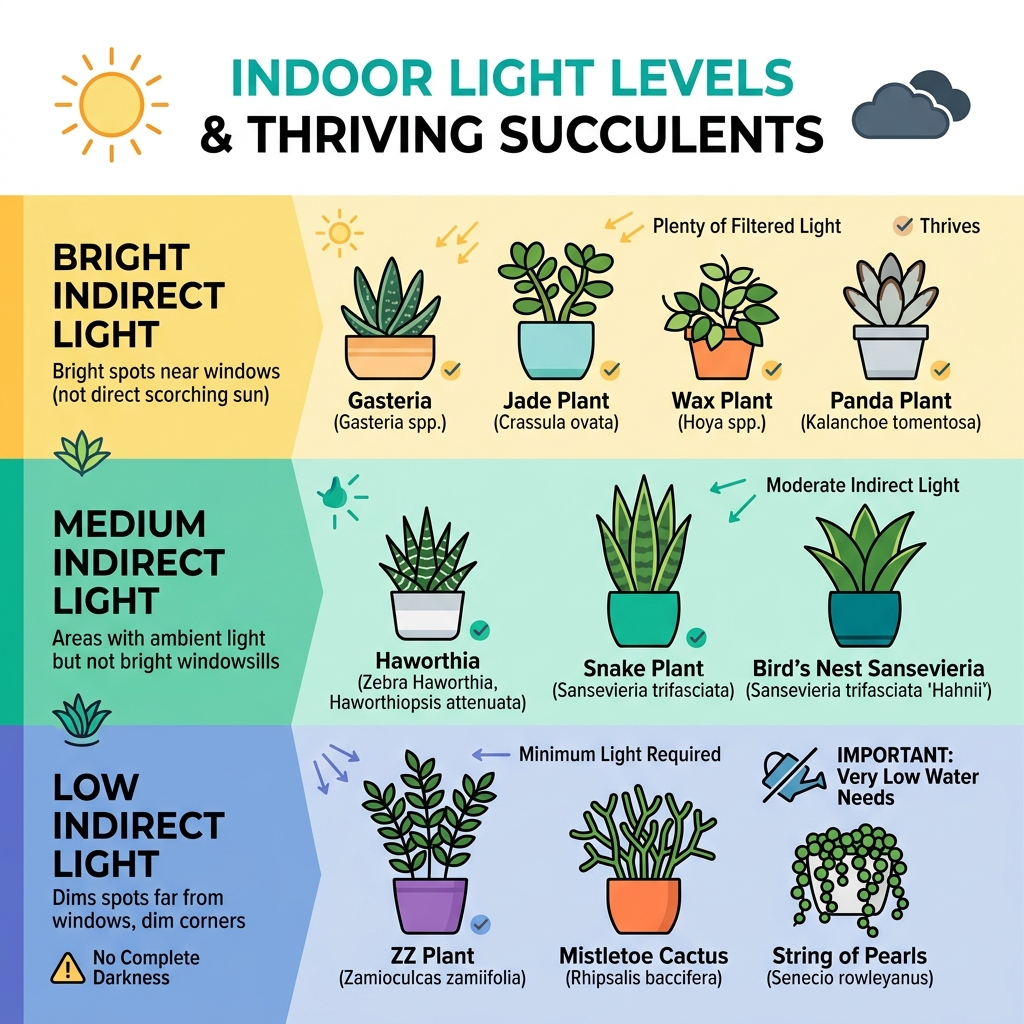
Top Low Light Succulents for Indoors
When we think of succulents, we often picture sun-drenched deserts. However, many species have developed clever “underground” strategies or shade-seeking behaviors to survive. For example, some varieties hide most of their bodies beneath the soil, exposing only the tips of their leaves to capture just enough light for photosynthesis. This makes them perfect candidates for our homes and offices.
One of our absolute favorites is the Haworthiopsis attenuata (Zebra Haworthia, Zebra Plant). It’s a striking, small succulent that features dark green leaves adorned with white, bumpy “tubercles” that look like zebra stripes. These tubercles aren’t just for show; they allow the plant to expand and contract based on water availability. Because it naturally grows in the shadows of larger plants in South Africa, it handles indoor shade with grace.
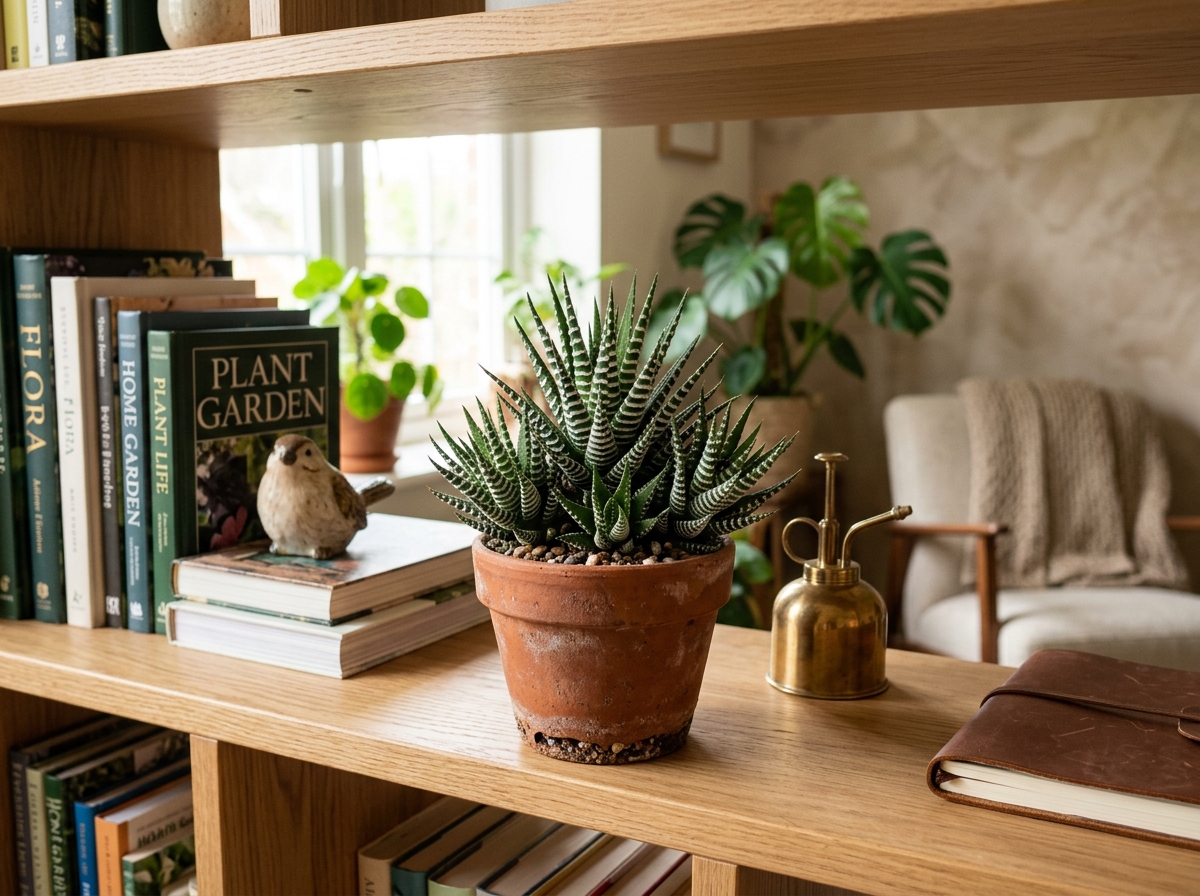
If you are just starting your indoor garden, we recommend choosing the best indoor succulents for beginners by looking for plants with high chlorophyll content—usually those with deep green leaves rather than bright reds or purples.
Other heavy hitters in the low-light category include:
- Snake Plant (Sansevieria): Often called “mother-in-law’s tongue,” these are practically bulletproof. They can survive far from windows and are actually better at handling underwatering than overwatering.
- ZZ Plant (Zamioculcas zamiifolia): This plant is nearly unkillable. It has waxy, deep green leaves that reflect what little light is available. It grows slowly but stays vibrant even in dim hallways.
- Gasteria: Known for their “tongue-shaped” leaves, these are close relatives of Haworthia. They are slow-growing and produce beautiful orange flowers annually if they are happy.
- Panda Plant (Kalanchoe tomentosa): Also known as “pussy ears,” these have fuzzy, silvery leaves that are soft to the touch. They prefer bright indirect light but are very tolerant of lower light levels compared to their Echeveria cousins.
- Aloe Vera: While it loves sun, it is surprisingly adaptable. We find that it stays a manageable 1-2 feet tall indoors and provides that famous healing sap for occasional kitchen burns.
For a deeper dive into specific species, check out our guide on top succulent varieties for low light conditions.
Best Low Light Succulents for Indoors: Tabletop Varieties
Tabletop succulents are perfect for those of us who want a bit of green on a desk or coffee table without taking up much real estate.
The Haworthiopsis concolor is an ideal choice here. It’s a slow grower with pointed green leaves covered in white spots. Like many Haworthias, it is summer dormant, meaning it takes a “nap” during the hottest months and requires almost no resources during that time.
Another architectural gem is the Bird’s Nest Sansevieria. Unlike the tall, sword-like versions of the Snake Plant, this variety stays low and forms a tight rosette that resembles a bird’s nest. It is widely considered one of the best succulents for very low-light locations.
If you want something with a bit more height, consider the Ponytail Palm. Despite its name, it’s actually a succulent (a cousin of the Yucca). It stores water in its bulbous base, which looks like a giant elephant’s foot. It’s a “set it and forget it” plant that adds a whimsical touch to any table.
When you are how to choose the best succulents for your indoor garden, consider the “Ox Tongue” (Gasteria). Its flat, rough leaves are incredibly sturdy and can handle the dry air often found in temperature-controlled offices.
Trailing and Flowering Low Light Succulents for Indoors
Not all low light succulents for indoors are compact rosettes. Some of the most beautiful varieties are those that trail gracefully from hanging baskets or shelves.
- String of Pearls (Senecio rowleyanus): These look like a string of green peas and can dangle 2-3 feet long. While they prefer bright indirect light, they can adapt to lower light if you are careful with the watering can.
- String of Hearts (Ceropegia woodii): This is a personal favorite for hanging baskets. Its delicate, heart-shaped leaves can grow vines up to 12 feet long in the wild, though they usually stay around 3 feet indoors.
- Burro’s Tail (Sedum morganianum): This plant features thick, fleshy leaves that cascade in heavy “tails.” Be careful, though—the leaves fall off easily if bumped (though you can root those fallen leaves to make new plants!).
- Mistletoe Cactus (Rhipsalis): This is a unique epiphytic succulent from the rainforests of South America. Unlike desert succulents, it prefers dappled light and slightly more humidity, making it perfect for a bathroom with a small window.
If you are looking for blooms, Holiday Cacti (like the Christmas or Thanksgiving Cactus) and the Wax Plant (Hoya) are your best bets. Hoyas are known for their sweet-scented, star-shaped flowers and their ability to vine over kitchen windows or curtain rods. We recommend ensuring proper light levels for indoor succulents by placing these near an east-facing window to encourage those beautiful blooms.
Essential Care and Maintenance for Shade Succulents
Caring for low light succulents for indoors requires a shift in mindset. Because these plants aren’t getting blasted by the sun, their metabolic rate is much slower. They don’t need much food, and they certainly don’t need much water.
The Watering Rule: We always advocate for the “soak and dry” method. This means you water the soil thoroughly until it drains out the bottom, and then you wait—sometimes for weeks—until the soil is bone-dry before watering again.
Seasonal Watering Needs for Low Light Succulents:
| Season | Growth Phase | Watering Frequency |
|---|---|---|
| Spring | Active Growth | Every 2-3 weeks |
| Summer | Dormancy (for some) | Once a month or less |
| Fall | Slowing Down | Every 3-4 weeks |
| Winter | Rest | Every 4-6 weeks |
One of the most important succulent-garden-lighting-guide/ tips is to remember that light and water are linked. Less light equals less water. If you overwater a plant in a dim corner, the soil stays damp too long, leading to the dreaded root rot.
Soil and Potting: Always use a well-draining cactus or succulent mix. We often mix in a bit of pumice or coarse sand to ensure the roots can breathe. Since many of these varieties, like the Zebra Plant, have shallow root systems, they actually prefer shallow pots.
Temperature and Humidity: Most indoor succulents thrive in temperatures between 60°F and 95°F. They generally prefer low humidity, but if you’re growing a Mistletoe Cactus or a Wax Plant, they won’t mind a little extra moisture in the air.
If your space is truly dim, you might consider artificial grow lights. Running full-spectrum LED lights for 6-8 hours a day can make the difference between a plant that is merely “surviving” and one that is “thriving.” For more on this, see our article on succulents-understanding-their-sunlight-needs/.
Propagation and Repotting Techniques
One of the joys of growing succulents is how easily they multiply. Most low-light varieties, especially Haworthia and Gasteria, produce “pups” or offsets. These are tiny baby plants that grow around the base of the mother plant.
How to Propagate Offsets:
- Wait until the pup is about one-third the size of the parent.
- Gently pull or cut the pup away using a sterilized blade.
- Let the “wound” callus over for 1-2 days in a dry spot.
- Place it in fresh, gritty soil.
- Wait about a week before watering to let the roots settle.
According to experts on how to grow and care for Zebra Haworthia, these plants actually enjoy being slightly pot-bound. You only need to repot every 2-3 years, usually in the spring. When you do repot, choose a container only one size larger than the current one and ensure it has plenty of drainage holes.
For trailing plants like the String of Pearls, propagation is even easier. Simply snip a stem, remove a few of the “pearls” near the cut end, and stick the stem back into the soil. It will grow new roots in no time. For more advanced lighting and growth tips, refer to our succulent-garden-lighting-guide-2/.
Troubleshooting and Pest Management
Even the most “tough-as-nails” plants run into trouble occasionally. The most common issue with low light succulents for indoors is etiolation. This is a fancy word for “stretching.” If your succulent starts to look tall, pale, and spindly, it’s literally reaching for more light. While you can’t “un-stretch” a plant, you can prune the leggy growth and move the plant to a slightly brighter spot.
Common Problems and Solutions:
- Root Rot: If the leaves turn mushy, yellow, or translucent, you are likely overwatering. Stop watering immediately and check if the roots are black and slimy.
- Mealybugs: These look like tiny bits of white cotton hidden in the nooks of the leaves. We treat these by dabbing them with a cotton swab dipped in 70% isopropyl alcohol.
- Scale: These look like small brown bumps on the stems. They can also be treated with alcohol or gently scraped off.
- Fungus Gnats: These tiny flies thrive in damp soil. Letting the soil dry out completely usually solves the problem.
Some varieties, like the Echeveria ‘Afterglow’, can be particularly susceptible to mealybugs if kept in stagnant air. Always ensure your plants have good ventilation, especially in humid rooms.
Frequently Asked Questions about Low Light Succulents
Are low light succulents safe for pets?
This is a vital question for many of us. Fortunately, many of the best low-light options are non-toxic. Haworthia and Gasteria are generally considered pet-safe and are excellent substitutes for Aloe Vera (which can be mildly toxic to cats and dogs if ingested). However, be cautious with the African Milk Tree; it produces a milky sap that is toxic and can irritate the skin. Always check the toxicity of a specific variety before bringing it home to a curious cat or dog.
How do I know if my succulent needs more light?
The biggest sign is etiolation—the stretching we mentioned earlier. You might also notice that the vibrant colors (like the white stripes on a Zebra Plant) start to fade, or the plant stops growing entirely. If your plant is leaning heavily toward the window, it’s a clear plea for a bit more sunshine.
Can succulents survive in a room with no windows?
In total darkness? No. All plants need light to produce energy. However, they can thrive in a windowless office if you provide artificial grow lights. A full-spectrum LED bulb placed a foot or two above the plant and set on a timer for 6-8 hours will mimic the sun well enough for most shade-tolerant species to survive and even grow.
Conclusion
Bringing low light succulents for indoors into your home is one of the easiest ways to add architectural interest and a sense of calm to your space. Whether it’s a “bulletproof” Snake Plant in a dim corner or a “funky” Zebra Haworthia on your desk, these plants prove that you don’t need a greenhouse to be a successful gardener.
By choosing the right varieties, mastering the “soak and dry” watering method, and keeping an eye out for signs of stretching, we can keep these desert survivors happy for years. For more tips on selecting the perfect greenery for your space, don’t forget to visit our guide on top succulent varieties for low light conditions. Happy planting!
