
Why Your Plants Need Specialized Cactus Soil
Indoor cactus soil is the single most important factor in keeping your cactus alive indoors. Get it wrong, and no amount of careful watering will save your plant from root rot.
Quick answer: The best indoor cactus soil is a fast-draining mix that combines organic material (like potting soil or coco coir) with inorganic grit (like perlite, pumice, or coarse sand). It should have a slightly acidic pH of 5.0-6.5 and never stay wet for long after watering.
Best indoor cactus soil at a glance:
| Need | What to Look For |
|---|---|
| Ready-made option | Commercial cactus/succulent mix with perlite or sand |
| DIY mix | 3 parts potting soil + 3 parts grit + 1 part perlite + 1 part pine bark |
| Key feature | Fast drainage, low water retention |
| Avoid | Heavy peat, vermiculite, compost, clay |
| Ideal pH | 5.0 – 6.5 (slightly acidic) |
Most indoor cacti die from too much moisture, not too little. Regular potting soil holds far more water than a cactus ever needs. It’s designed for thirsty plants – not desert survivors.
The fix is simple: use a soil mix built to drain fast and dry out quickly between waterings. Whether you buy a commercial blend or mix your own, the goal is the same – keep roots dry, airy, and healthy.
For a broader botanical overview of how cacti are adapted to dry environments, see this cactus reference.
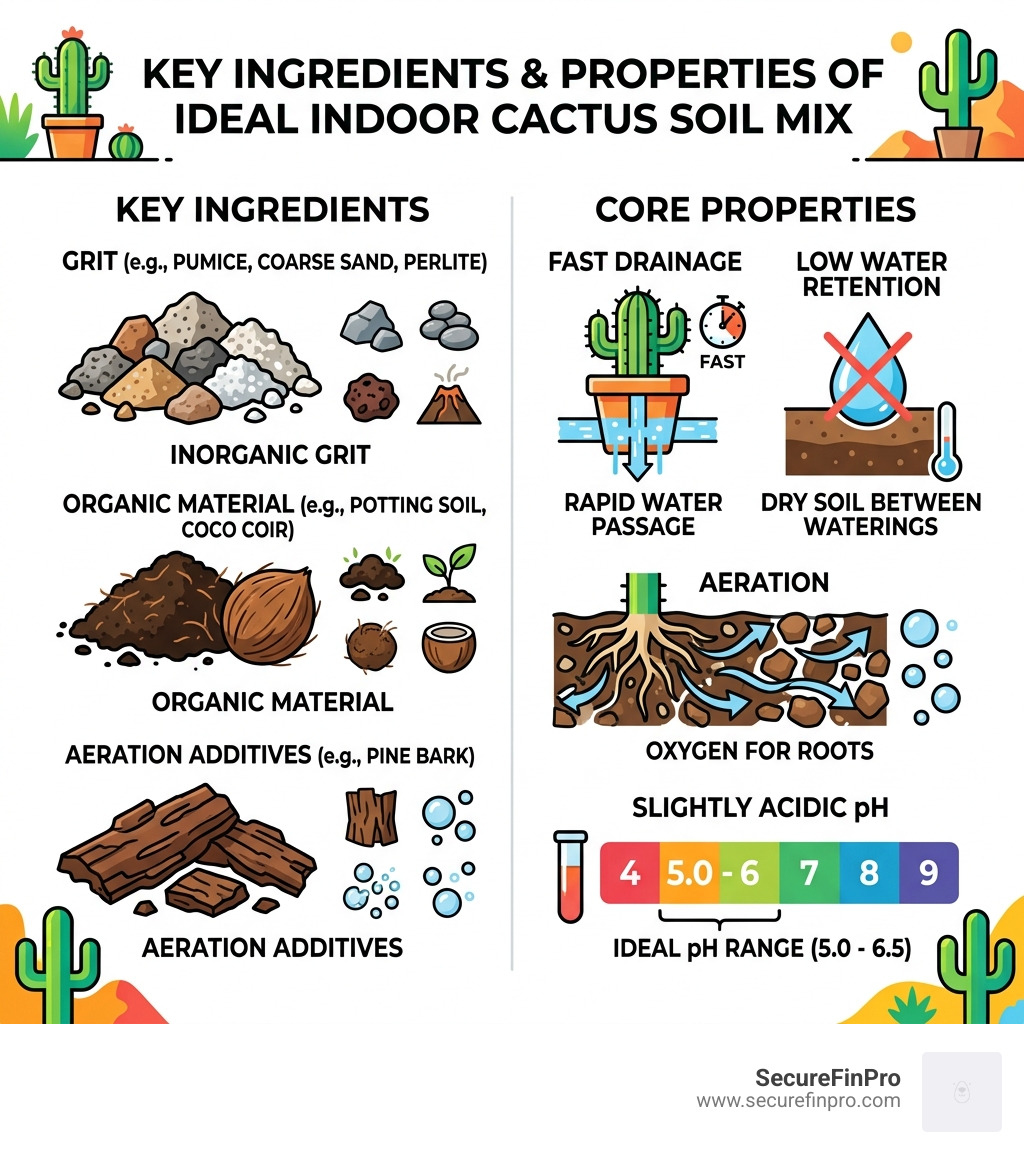
Basic indoor cactus soil vocab:
What makes cactus soil different from regular potting soil?
When we look at a bag of standard potting soil, we see a product designed to hold onto water like a sponge. It is usually packed with sphagnum peat moss and compost, which are great for ferns or petunias but a death sentence for a desert-dweller.
The primary difference lies in the ratio of organic to inorganic matter. Regular soil is mostly organic-material that once lived and now holds moisture and nutrients. Indoor cactus soil, however, prioritizes inorganic components. These are things like crushed rock, pumice, or perlite that do not decompose and do not soak up water.
This structural difference ensures high aeration. Cactus roots need to breathe; in heavy, wet soil, the air pockets are filled with water, effectively suffocating the plant. By choosing a mix that mimics a desert habitat, you provide the oxygen your plant craves. To dive deeper into why standard dirt is dangerous, check out how to stop drowning your plants with the best succulent potting soil.
Why is well-draining soil essential for indoor cacti?
In the wild, many cacti live in sandy, rocky soils where rain is rare but intense. When it does rain, the water moves through the ground rapidly. Indoors, we have to recreate this “fast-flush” experience.
If water sits stagnant at the bottom of a pot, it creates a breeding ground for fungal infections and harmful bacteria. This leads to the dreaded root rot-a condition where the roots turn mushy and black, eventually killing the plant from the bottom up.
Furthermore, indoor environments typically have less airflow and lower light than the great outdoors. This means soil takes even longer to dry out. A specialized indoor cactus soil compensates for these indoor limitations by ensuring that whatever water the plant doesn’t drink immediately drains away or evaporates quickly. For those struggling with specific species like the Opuntia, we have a specialized prickly pear problems a guide to perfect soil drainage to help you troubleshoot.
Essential Ingredients for the Perfect Indoor Cactus Soil Mix
Creating the perfect substrate is like following a recipe. You need the right “crunch” to keep the roots happy. We recommend focusing on a few heavy hitters that provide the best balance of drainage and support.
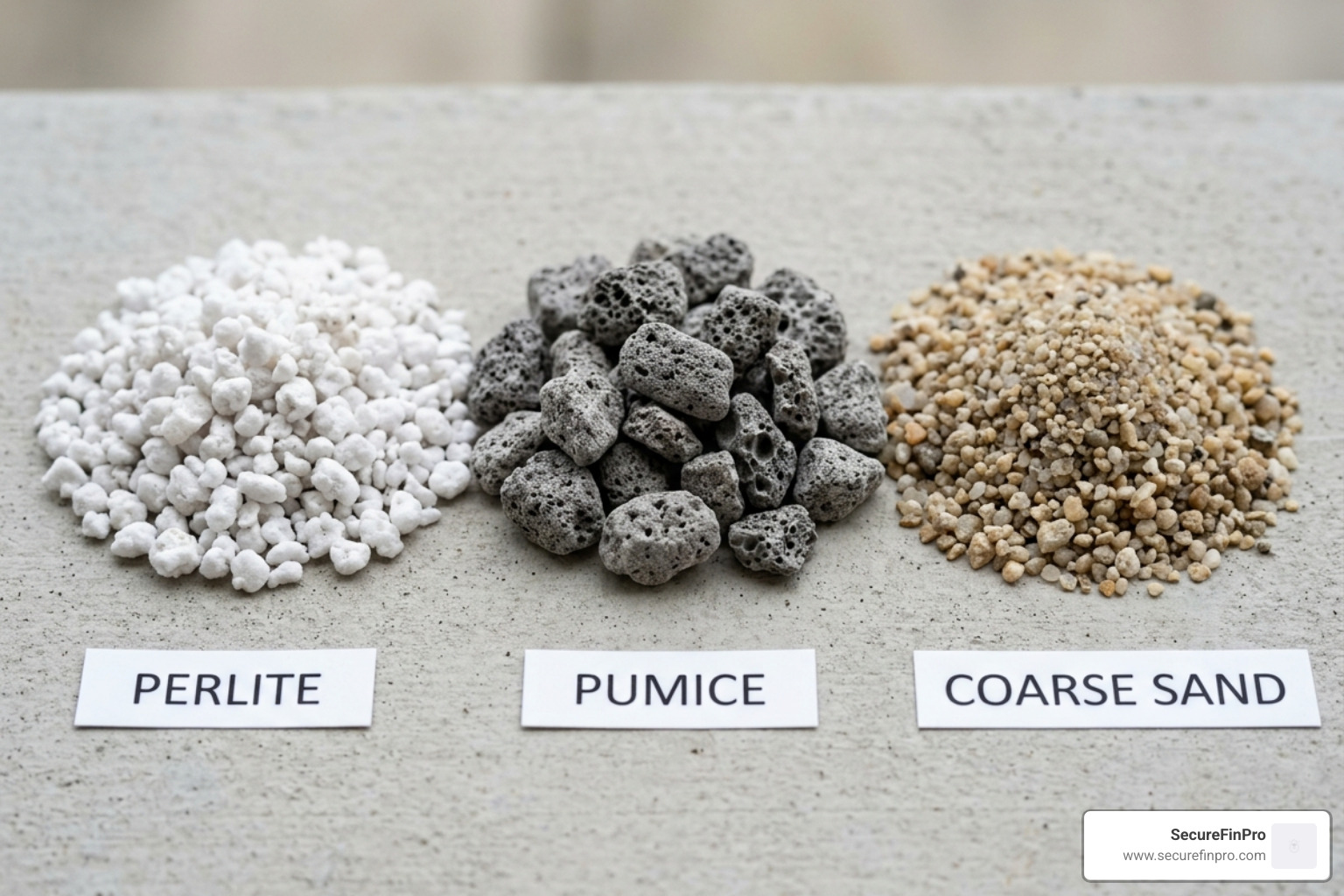
- Pumice: This is volcanic rock that is full of tiny holes. It provides excellent aeration and doesn’t break down over time. It’s often considered the “gold standard” for cactus grit.
- Perlite: A cheaper, lighter alternative to pumice. It’s puffed volcanic glass that looks like little white Styrofoam balls. It’s great for drainage, though it can sometimes float to the top of the pot during watering.
- Coarse Sand: Not the fine sand you find at the beach (which can actually clog up soil), but horticultural grit or “turface.” This adds weight and helps water move through the mix.
- Coco Coir: This is a sustainable alternative to peat moss. It is made from coconut husks and is much easier to re-wet once it has dried out completely. You can learn more about this ingredient in our guide: is coco peat for succulents the secret to happy plants.
For a complete breakdown of how these pieces fit together, see our guide on mixing it up how to create the perfect succulent substrate.
Desert vs. Epiphytic Indoor Cactus Soil Needs
Not all cacti are from the desert! This is a common mistake that leads to many “Christmas Cactus” casualties.
- Desert Cacti: These are your classic prickly friends (like Saguaro or Mammillaria). They need the highest amount of inorganic grit—think 60% to 70% pumice or perlite and very little organic matter.
- Epiphytic Cacti: These include Holiday cacti (Christmas, Thanksgiving, and Easter cacti) and Orchid cacti. In the wild, they grow on trees in tropical jungles. They actually prefer a bit more moisture and organic matter than their desert cousins. For these, we suggest adding orchid bark to the mix. The bark allows the roots to “clasp” onto something, mimicking their natural home on a tree trunk, while still providing the drainage necessary to prevent rot.
The role of additives like mycorrhizae and yucca extract
Modern indoor cactus soil often includes “extras” that can give your plants a competitive edge.
Mycorrhizae are beneficial fungi that form a symbiotic relationship with plant roots. They effectively expand the root system’s reach, helping the plant take up nutrients and water more efficiently while increasing stress resistance. High-quality commercial cactus mixes often feature these beneficial fungal additions.
Yucca extract is another clever addition. It acts as a natural wetting agent. Because cactus soil can become “hydrophobic” (water-repellent) when it gets extremely dry, yucca extract helps the water penetrate the soil evenly rather than just running down the sides of the pot.
Finally, limestone is frequently used to adjust the pH levels. Most cacti prefer a slightly acidic environment, and limestone helps keep the mix from becoming too acidic over time as organic matter breaks down.
How to Make and Test Your Own Custom Blend
If you want total control over your plant’s health, DIY is the way to go. It’s often cheaper in the long run and allows you to tailor the mix to your specific home environment.
A reliable “Standard Mix” for 95% of indoor cacti is the 3:3:1:1 ratio:
- 3 parts Potting Soil (sifted to remove large chunks)
- 3 parts Grit (Pumice or Poultry Grit)
- 1 part Perlite
- 1 part Pine Bark (small fines)
The Squeeze Test: To see if your mix is ready, dampen it slightly and squeeze a handful. When you let go, the soil should fall apart instantly. If it stays in a clump, you need more grit! For more recipe ideas, check out our article: dont treat your echeveria like dirt with the perfect soil mix.
Improving Drainage in Your Indoor Cactus Soil
Even the best soil can’t save a plant in a bad pot. To maximize the effectiveness of your indoor cactus soil, you must ensure your container has at least one large drainage hole.
If you find your soil is still staying wet for more than 4-5 days, you can “top-dress” or amend the mix with more grit. Adding a layer of small rocks or gravel to the top of the soil isn’t just for looks; it prevents the base of the cactus from sitting against damp earth, which is a common cause of stem rot. For a list of the best materials to use, see the best soil mixes for happy indoor succulents.
Ideal pH levels and organic matter ratios
While we often focus on drainage, chemistry matters too. The ideal pH for indoor cactus soil is between 5.0 and 6.5. This slightly acidic range allows the plant to absorb minerals like iron and magnesium.
In terms of organic matter, indoor plants generally need less than outdoor ones. Outdoor plants deal with sun and wind that evaporate water quickly. Indoors, we recommend that your mix stays below 40% organic matter (like peat humus or forest products). This ensures the “ecosystem” in the pot stays lean and clean.
Choosing the Best Commercial Soil for Indoor Cacti
Sometimes you just want to open a bag and get to work. There are excellent ready-to-use options available that are specifically formulated for indoor success.
When shopping, look for products that mention “fast-draining” or “professional grade.” High-quality options typically include:
- Standard Fast-Draining Mixes: These contain forest products, sand, and perlite, often including continuous-release plant food that feeds for several months.
- Mycorrhizae-Enhanced Mixes: These use specialized technology to stimulate root growth and provide organic-based nutrition.
- Organic Specialty Blends: These use natural wetting agents like yucca extract and a rich blend of forest products and perlite.
For more shopping tips, visit our indoor garden soil recommendations.
Top recommended commercial products for indoor use
If you are looking for specialty mixes, look for hand-blended soils that are often cleaner and more specialized than mass-market brands. These are great if you are worried about bringing pests like fungus gnats into your home. Another excellent choice is an OMRI-listed mix, which is certified for organic gardening.
Ingredients to avoid to prevent root rot
When reading the back of a soil bag, put it back on the shelf if you see these “red flag” ingredients in high amounts:
- Heavy Peat: While some peat is okay, a mix that is 90% peat will become a hard, water-repellent brick when dry.
- Vermiculite: This is the opposite of perlite. It is designed to hold water. Great for starting seeds, terrible for cacti.
- Untreated Compost or Manure: These can be too “hot” (nutrient-dense) and often hold too much moisture and bacteria for indoor pots.
- Clay: This will compact around the roots and prevent drainage.
Frequently Asked Questions
How often should I refresh my indoor cactus soil?
Soil doesn’t last forever. Over time, the organic components break down and the inorganic bits can get “clogged” with mineral deposits from your tap water.
We recommend a repotting schedule of every 1 to 2 years. The best time to do this is in early spring, just as the plant is waking up for its growing season. Refreshing the soil provides a new boost of nutrients and ensures the drainage remains “top notch.”
What are the signs my cactus needs better soil?
Your plant will tell you when it’s unhappy. Look out for these warning signs:
- Yellowing or Paling: This often indicates a nutrient deficiency or a pH imbalance.
- Mushy Stems: A classic sign of root rot caused by soil that stays wet too long.
- Slow Growth: If your cactus hasn’t moved an inch in two years, the soil might be too compacted for roots to expand.
- Water Pooling: If you water your plant and the liquid sits on top of the soil for more than a few seconds, your soil has become hydrophobic or is too dense.
Can I use regular potting soil if I add sand?
Technically, yes—but with a major caveat. You cannot just add a handful of playground sand to a pot of dirt. This often creates a “concrete” effect that actually worsens drainage.
If you must use regular soil, you need to follow a heavy amendment ratio: 1 part soil to 2 parts grit. Always use coarse horticultural sand or poultry grit rather than fine sand. Even then, commercial or DIY indoor cactus soil is always the safer bet for the long-term health of your collection.
Conclusion
At SecureFinPro, we believe that gardening should be a source of joy, not stress. Choosing the right indoor cactus soil is the “insurance policy” your plants need to thrive in a home environment. By prioritizing drainage, selecting the right ingredients like pumice and coco coir, and avoiding moisture-trapping additives, you can enjoy your prickly companions for decades.
Remember to check your soil’s performance regularly and don’t be afraid to repot when you see signs of stress. For more expert tips on keeping your indoor desert thriving, explore our succulent care services and guides. Happy planting!
