
Why Keeping Cactus at Home Is Easier Than You Think
Keeping cactus at home is one of the simplest ways to add low-maintenance greenery to your space — but a few basic rules make the difference between a thriving plant and a mushy, overwatered mess.
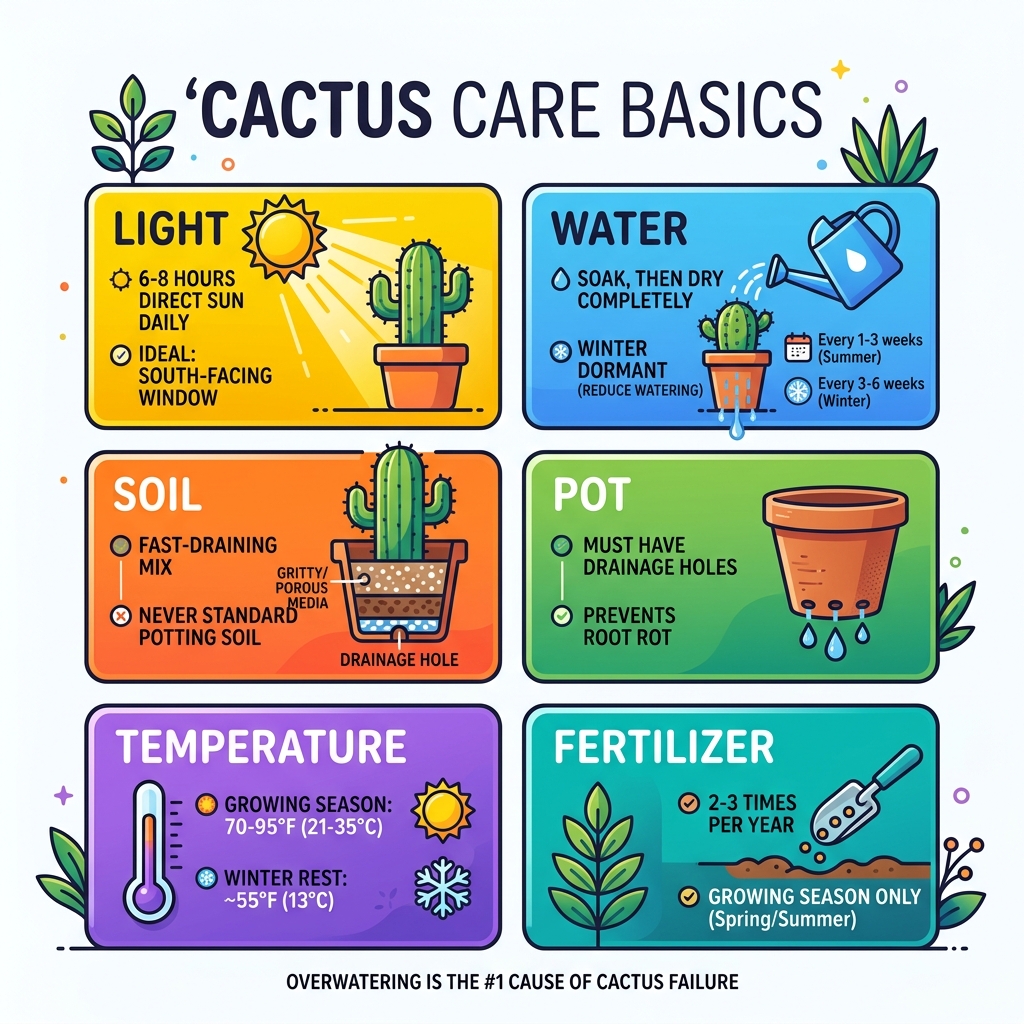
Here’s the quick version:
- Light: 6-8 hours of direct sun daily, ideally in a south-facing window
- Water: Soak thoroughly, then let soil dry completely before watering again (every 1-3 weeks in summer, every 3-6 weeks in winter)
- Soil: A gritty, fast-draining cactus mix — never standard potting soil
- Pot: Always use a container with a drainage hole
- Temperature: 70-95°F in summer; a cooler 55°F rest period in winter
- Fertilizer: 2-3 times per year during the growing season only
That’s really it. Most cacti fail indoors for one reason: too much water. Research suggests overwatering is behind an estimated 70% of all indoor cactus failures.
Cacti are built for drought. They store water inside their thick stems, which is exactly why they can handle weeks of neglect — but they can’t handle sitting in wet soil. Once you understand that, everything else clicks into place.
Whether you’re drawn to their bold, sculptural shapes, their near-zero maintenance needs, or just the fact that they won’t die if you forget them for a month, cacti are genuinely one of the best houseplants for a busy lifestyle.
Essential Requirements for Keeping Cactus at Home
When we talk about keeping cactus at home, we are essentially trying to recreate a mini-desert in our living rooms. Cacti are members of the Cactaceae family, and while there are thousands of species, most share a common anatomical trait: areoles. These are small, cushion-like bumps from which spines, flowers, and branches grow. These areoles are what distinguish a true cactus from other succulents.
To thrive, these plants need more than just a spot on a shelf. They need specific environmental cues to grow and, eventually, to reward us with their short-lived but stunning flowers (which often last only 1 to 3 days).

Mastering Light for Keeping Cactus at Home
Light is the fuel that keeps a cactus going. Most desert varieties require at least 6 to 8 hours of bright, direct sunlight every day. In the northern hemisphere, a south-facing window is the prime real estate for your prickly friends. West-facing windows are a decent second choice, providing intense afternoon sun.
If your cactus doesn’t get enough light, it will suffer from a condition called etiolation. This is when the plant becomes pale, weak, and stretches desperately toward the nearest light source, resulting in a “tall and skinny” look that is often permanent. To prevent this, ensuring-proper-light-levels-for-indoor-succulents is critical. We also recommend rotating your pots a quarter turn every few weeks so that all sides of the plant receive equal exposure, preventing it from leaning.
For those of us living in homes with limited natural light, artificial help is necessary. Studies show that for robust indoor growth, cacti need a light intensity of 4,000 to 6,000 lux. You can achieve this using full-spectrum LED grow lights kept on for 12 to 14 hours a day. For more on this, check out our guide on succulents-understanding-their-sunlight-needs. According to How to Care for a Cactus, placing them near a skylight is another excellent way to maximize overhead exposure.
Ideal Temperature and Humidity Conditions
Cacti are surprisingly flexible with temperature, but they do have preferences. During the active growing season (spring and summer), they thrive in temperatures ranging from 70°F to 95°F. They love the heat! However, they are also adapted to the dramatic temperature drops of the desert at night.
One of the best-kept secrets of keeping cactus at home is the “winter nap.” To encourage your cactus to bloom, it needs a dormant period in late fall and winter. During this time, we should aim to keep them in a cooler spot — around 55°F (10-15°C). This cool-down period, combined with reduced watering, signals to the plant that it’s time to rest, which can increase the chances of flowering by up to 40%.
Humidity is rarely an issue for desert cacti, as they prefer dry air. In fact, typical household humidity is usually just fine. However, we should avoid keeping them in windowless bathrooms where steam from showers can lead to fungal issues. You can learn more about the-ideal-room-temperature-for-healthy-succulents and caring-for-your-succulents-in-cooler-temperatures to ensure your home environment is just right.
Moving Indoor Cacti Outdoors
When the weather warms up, your cacti will appreciate a “summer vacation” on a patio or balcony. The increased airflow and intense sun can trigger a growth spurt. However, we must be careful with the transition.
- Acclimatization: Do not move a cactus directly from a dim corner to full outdoor sun. It will get a “sunburn,” appearing as bleached or scorched brown patches. Start it in a shaded area for a week, then gradually move it into brighter spots.
- The 50°F Threshold: Only move them outside once night temperatures consistently stay above 50°F.
- Summer Storms: While a rain shower is fine, frequent heavy storms can waterlog a pot. Ensure your outdoor pots have excellent drainage, or move them under a cover during rainy weeks.
Watering, Feeding, and Seasonal Care
Watering is where most people get nervous, but it’s actually quite simple once you stop thinking of them as traditional houseplants. We use the “soak and dry” method. This means you pour water until it runs out of the drainage holes, then you wait until the soil is bone dry all the way to the bottom before watering again.
Watering Schedules and Signs of Distress
In the spring and summer, your cactus is “awake” and growing. During this time, it might need water every 1 to 3 weeks. In the winter, the plant goes dormant and its metabolism slows to a crawl. You might only need to water it once every 4 to 6 weeks — or even not at all if the room is cool and the plant looks plump.
How do you know if you’re doing it right?
- Signs of Overwatering: The base of the plant becomes yellow, mushy, or translucent. This is usually root rot, and it is often fatal if not caught early. We have a detailed guide on preventing-overwatering-succulents-indoors to help you avoid this.
- Signs of Underwatering: The plant may look shriveled, puckered, or “thin.” If the soil has become so dry that it pulls away from the edges of the pot, it may have become hydrophobic (repelling water). In this case, you may need to bottom-water by sitting the pot in a tray of water for 30 minutes.
For more specific timing, How Often to Water Indoor Cactus Plants provides excellent seasonal breakdowns. You can also check for signs-your-succulent-needs-water to keep your plant in the goldilocks zone.
Fertilizing for Healthy Growth
While cacti aren’t heavy feeders, they do appreciate a little boost during their active growing months. We recommend fertilizing 2 to 3 times per year, specifically in the spring and summer.
Use a specialized cactus fertilizer or a balanced liquid fertilizer (like a 5-10-5 or 10-10-10) diluted to half-strength. Low nitrogen is generally preferred because high nitrogen can cause weak, watery growth that makes the plant more susceptible to pests. Organic options like worm compost tea are also excellent. Never fertilize in the winter; the plant isn’t growing enough to use the nutrients, and they will just build up in the soil as harmful salts. Follow these routine-care-steps-for-healthy-succulents for a consistent schedule.
Potting, Soil, and Propagation
The foundation of keeping cactus at home is what we put them in. If the soil stays wet for more than a few days, the roots will suffocate.
| Feature | Desert Cacti | Tropical (Forest) Cacti |
|---|---|---|
| Light | Direct, intense sun | Bright, filtered light |
| Watering | Let dry completely | Keep slightly moist |
| Soil | Gritty, sandy mix | Richer, peat-based mix |
| Humidity | Low (dry air) | Moderate to high (50%+) |
| Example | Golden Barrel, Bunny Ears | Christmas Cactus, Fishbone |
Most succulents and cacti prefer slightly acidic soil with a pH between 5.5 and 6.5. When choosing-the-best-indoor-succulents-for-beginners, it’s helpful to know which category your plant falls into.
Soil and Pot Selection
Regular potting mix is often a “death sentence” for a cactus because it is designed to hold onto moisture. For a healthy indoor-succulent-garden-for-beginners, we need a gritty mix. A good DIY recipe is:
- 1 part potting soil (peat-free is best)
- 1 part coarse sand or poultry grit
- 1 part perlite or pumice
For the pot, terracotta is our top recommendation. Because the clay is porous, it allows the soil to “breathe” and helps moisture evaporate from the sides, not just the top. This provides a built-in safety net against overwatering. Most importantly, the pot must have a drainage hole.
Repotting and Propagation for Keeping Cactus at Home
Because cacti are slow growers, they don’t need frequent repotting. Smaller varieties might only need a new home every 5 years. The best time to repot is in the spring, just as the growing season starts. When you do, choose a pot that is only 1 to 2 inches wider than the current one; cacti actually prefer to have their roots a bit “cramped,” which can even encourage blooming.
Propagation is one of the most rewarding parts of keeping cactus at home. Many cacti produce “pups” or offsets — tiny clones of themselves that grow at the base or along the stem.
- Remove: Carefully twist or snip the pup off the mother plant (wear gloves!).
- Callus: This is the most important step. Let the pup sit on a dry paper towel for 3 to 7 days until the “wound” dries out and forms a hard callus.
- Plant: Place the callused end into a fresh cactus mix.
- Wait: Do not water for the first week or two. Once roots begin to form, you can treat it like a mature plant.
For a deeper dive, see our indoor-succulents-a-comprehensive-care-guide.
Troubleshooting Problems and Safety
Even with the best care, issues can arise. The key is to catch them early.
Common Pests and Disease Management
While cacti are tough, they aren’t invincible. Here are the “usual suspects”:
- Mealybugs: These look like tiny bits of white cotton hiding in the crevices of the plant. You can dab them with a cotton swab dipped in rubbing alcohol to kill them instantly.
- Scale: These look like small, brown, raised bumps on the skin of the cactus. They can be scraped off or treated with insecticidal soap.
- Spider Mites: If you see very fine webbing and tiny reddish dots, you have mites. Increased airflow and a gentle wash can help.
- Rot: If you see dark, sunken spots or the plant feels mushy, it’s likely rot. You can sometimes save the plant by cutting away the rotten parts with a sterile knife and treating the healthy area with a diluted hydrogen peroxide solution.
Check out common-problems-with-indoor-succulents-and-how-to-fix-them and our tips for reviving-a-dying-succulent-dos-and-donts for more help.
Safety for Pets and Children
Safety is a major consideration when keeping cactus at home. While most cacti are not chemically toxic, their physical defenses are formidable.
- Spines: These are the obvious needles. Some are hooked and very difficult to remove.
- Glochids: These are the “sneaky” ones. Found on Prickly Pears (Opuntia), they are tiny, hair-like barbed bristles that can cause intense irritation and are almost invisible to the eye.
- Toxicity: Most true cacti are safe, but be careful with “succulents” often sold alongside them. For example, Euphorbia (like the African Milk Tree) contains a milky white sap that is highly toxic and can cause skin blisters or temporary blindness if it gets in the eyes.
We recommend keeping spiny plants on high shelves or in hanging planters out of reach of curious paws and little hands. For more safety tips, see our indoor-succulents-a-comprehensive-care-guide-2.
Conclusion
Keeping cactus at home is more than just a decor trend; it’s an invitation to slow down and appreciate the resilience of nature. These plants don’t demand our constant attention, making them the perfect companion for a modern, busy lifestyle. By providing them with the “big three” — intense light, gritty soil, and infrequent but deep watering — you can enjoy these sculptural beauties for decades.
At SecureFinPro, we believe that a green thumb is simply the result of having the right information. Whether you’re a first-time plant parent or a seasoned collector, the “pointy truth” is that cacti are some of the most rewarding plants you can own.
Explore more at SecureFinPro for more guides on creating your perfect indoor oasis.
Frequently Asked Questions about Keeping Cactus at Home
How often should I water my indoor cactus? In the active growing season (spring/summer), water every 1 to 3 weeks once the soil is completely dry. In the winter, reduce this to once every 4 to 6 weeks.
Do cacti need special soil? Yes. Never use standard potting soil alone. A well-draining mix containing at least 30% grit, coarse sand, or perlite is essential to prevent root rot.
Why is my cactus growing tall and skinny? This is etiolation, caused by a lack of light. Move your plant to a brighter south-facing window or use a grow light to stop the stretching, though the existing skinny growth will remain.
