
Are My Succulents Over or Underwatered? Identifying the Visual Cues
Identifying whether your plant is drowning or parched is the first step toward becoming a succulent pro. While both conditions can cause the plant to look “wilted,” the tactile and visual cues are distinct once you know where to look. We often find that the most common question—are my succulents over or underwatered—can be answered by simply looking at the vibrancy and “inflated” nature of the leaves.

When a succulent is healthy, its leaves act like fully pressurized water balloons. They are firm to the touch and have a consistent color. When that balance shifts, the visual cues change:
- Color Vibrancy: Overwatered succulents often lose their rich greens or “stress colors” (pinks and reds) and turn a sickly, translucent yellow. Underwatered succulents tend to look dull, faded, or develop crispy brown edges.
- Leaf Plumpness: Overwatered leaves may actually look too full at first, eventually becoming stretched and “jelly-like.” Underwatered leaves look deflated, flat, and thin.
- Tactile Testing: Give the leaf a very gentle squeeze. If it feels like a ripe tomato about to burst, it’s overwatered. If it feels like a piece of soft leather or a raisin, it’s thirsty.
To help you diagnose your plant quickly, we’ve put together a comparison of the most common red flags. Understanding how to identify succulent watering issues involves looking at the plant as a whole, from the top growth down to the soil line.
| Symptom | Overwatered (Too Much Love) | Underwatered (Neglected) |
|---|---|---|
| Leaf Appearance | Translucent, mushy, “jelly” look | Shriveled, wrinkled, “raisin” look |
| Leaf Color | Yellowing or blackening from the center | Faded, brown, or crispy at the tips |
| Leaf Attachment | Drop off easily with a tiny bump | Stay attached until completely crispy |
| Soil Moisture | Damp, cool, or moldy smelling | Bone dry, dusty, or hydrophobic |
| New Growth | May look pale or stunted | Often looks wrinkled or stays small |
Moisture monitoring is your best friend here. Before you reach for the watering can, stick your finger or a wooden skewer into the soil. If it comes out with moist dirt clinging to it, step away from the plant!
The Red Flags of Overwatering and Root Rot
Overwatering is the “silent killer” of the succulent world. Because these plants are adapted to arid environments, their cells are designed to soak up every drop of water they find. When they are forced to sit in wet soil, those cells literally “burst” from the pressure, leading to a breakdown of the plant’s structure.
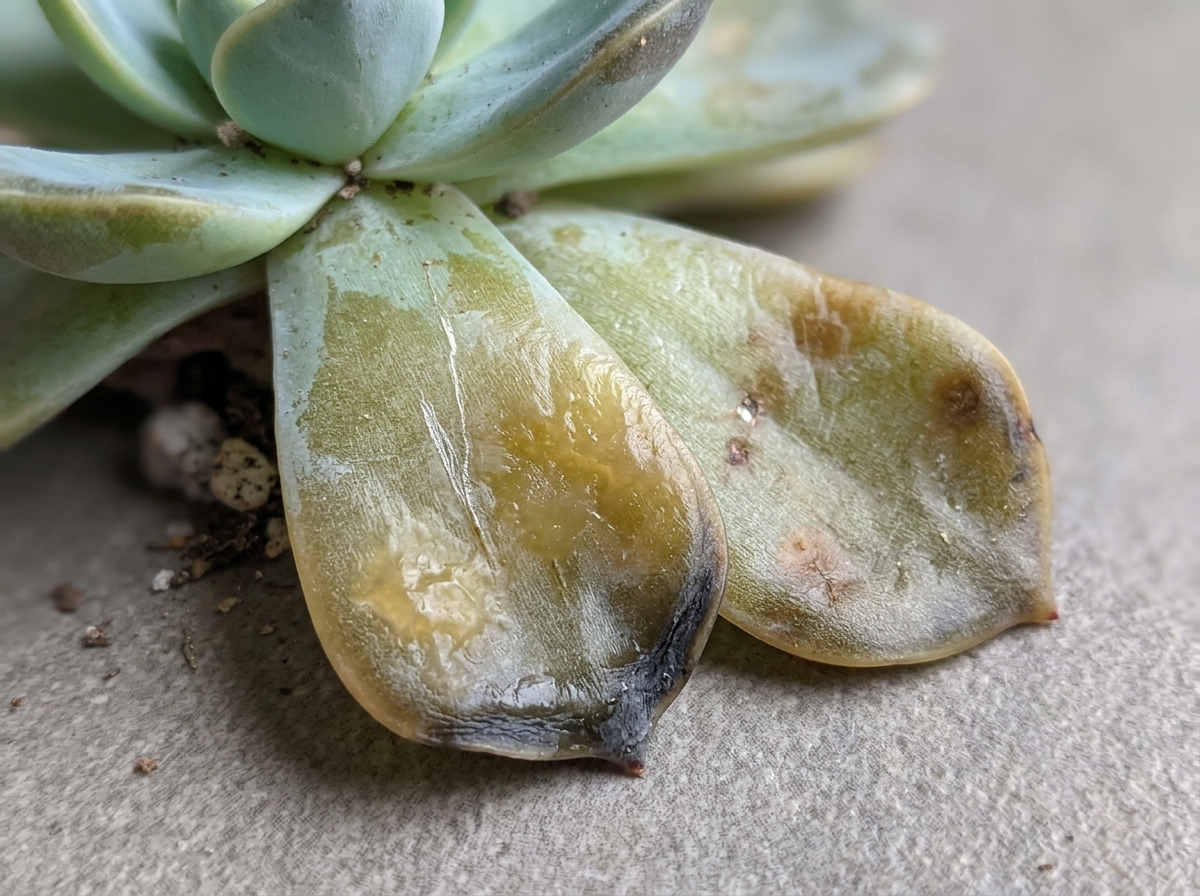
The most dangerous sign of overwatering is root rot. This happens when fungal pathogens thrive in anaerobic (oxygen-free), soggy soil. The roots turn from healthy white or pink to a slimy, stinky black. Once rot moves from the roots into the stem, the plant’s “circulatory system” shuts down.
Key red flags include:
- Translucent Leaves: If the leaves look like they are turning into yellow jelly, the plant is severely overwatered.
- Black Stems: A dark spot climbing up the stem from the soil line is a sign of advanced rot.
- Mass Leaf Drop: While it’s normal for a plant to lose an occasional leaf, an overwatered succulent will drop perfectly “plump” (but mushy) leaves at the slightest touch.
We highly recommend preventing overwatering of succulents indoors by ensuring your environment isn’t working against you. High humidity and low light mean the soil stays wet for much longer than it would in a sunny window. Many common watering mistakes with succulents stem from using the wrong “tools” for the job—namely, the wrong pot and soil.
Why Are My Succulents Over or Underwatered? The Role of Soil and Pots
The answer to “are my succulents over or underwatered” often lies beneath the surface. You could be following a “perfect” schedule, but if your soil holds onto water like a sponge, your plant will still rot.
- Drainage Holes are Non-Negotiable: We cannot stress this enough—your pot must have a hole at the bottom. Without one, water pools at the base, creating a “death trap” for roots. If you love a decorative pot that lacks a hole, use it as a “cachepot” (put the plant in a plain plastic nursery pot with holes, then set that inside the pretty one).
- The Right Mix: Standard potting soil is usually too “peaty” and dense. We suggest checking out indoor garden soil recommendations that focus on aeration. A good succulent mix should be at least 50% inorganic material like perlite, pumice, or coarse sand.
- Pot Material: Terra cotta is excellent for beginners because the clay is porous; it literally “breathes,” helping moisture evaporate from the sides of the pot. Plastic and ceramic hold moisture longer, which requires much more careful watering.
Choosing the best containers for indoor gardens is about matching the pot to your watering style. If you tend to be a “heavy-handed” waterer, go with terra cotta and a very gritty soil mix.
Recognizing and Reviving an Underwatered Succulent
The good news? It is significantly easier to save an underwatered succulent than an overwatered one. While an overwatered plant is literally rotting away, an underwatered one is simply “hibernating” and using up its stored reserves.
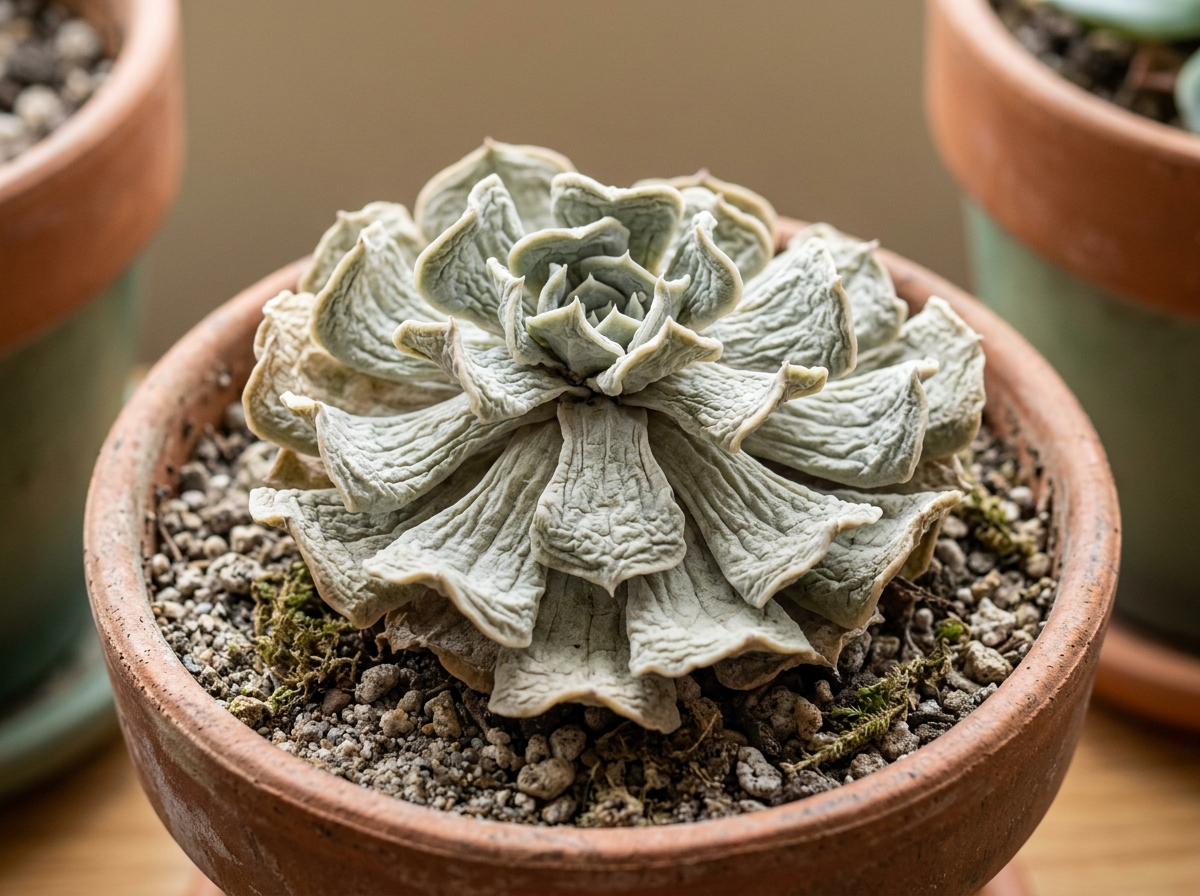
When a succulent is thirsty, it will start to look like a raisin. The leaves will wrinkle, lose their shine, and feel flexible or “floppy” rather than firm. You might also notice:
- Aerial Roots: These are pink or white hair-like roots that grow out of the stem above the soil. The plant is literally trying to “grab” moisture out of the air.
- Stunted Growth: If your plant hasn’t grown an inch in six months, it might not have enough fuel (water) to produce new cells.
- Crispy Tips: Unlike the mushy brown of rot, these tips will be dry, brittle, and may crumble when touched.
If you see these signs, your plant is telling you it’s time for a deep soak. For a detailed breakdown of these cues, see our guide on underwatered succulent symptoms and solutions.
How to Tell if Your Succulents Are Over or Underwatered Based on Leaf Position
One of the biggest points of confusion for new owners is the “dying bottom leaf.” We want to clear this up: dried-up bottom leaves are usually normal!
As a succulent grows, it produces new leaves from the center (the “meristem”). To fuel this new growth, the plant will often reabsorb the nutrients and water from its oldest, lowest leaves. These leaves will slowly shrivel up, turn brown, and become paper-thin. This is a natural part of the growth cycle and energy conservation.
- Normal: Only the bottom-most leaves are drying out one by one. The rest of the plant looks firm and healthy.
- Underwatered: The entire plant looks wrinkled, including the middle and upper leaves.
- Overwatered: The bottom leaves turn yellow and mushy, or the top leaves start rotting first (which is a very bad sign).
Learning the signs your indoor succulent needs water means looking at the “heart” of the plant. If the top leaves are plump, your plant is likely just doing some “spring cleaning” with its bottom leaves.
Step-by-Step Rescue Guide for Struggling Plants
If you’ve diagnosed your plant and realized things are looking grim, don’t panic. Succulents are incredibly resilient. We’ve seen plants come back from being nothing more than a dry stick or a single healthy leaf.
Rescuing an Overwatered Plant (“Succulent Surgery”)
If the stem is turning black, you need to act fast.
- Remove the plant from the soil: Get rid of all the wet dirt.
- Inspect the roots: Cut away any black, slimy roots with sterilized scissors.
- Check the stem: If the stem is black, cut the “head” of the succulent off above the rot. Ensure the cross-section of the stem you keep is clean and green.
- Callous: Let the cutting sit out in the air for 3-5 days until the wound dries and forms a “scab.”
- Replant: Place the calloused cutting on dry, well-draining soil. Do not water until you see new roots forming!
For more tips on what to do (and what not to do), check out reviving a dying succulent dos and don’ts.
Reviving an Underwatered Plant
- The “Soak and Dry” Method: Don’t just give it a tiny sip. Water the soil until water pours out of the drainage hole.
- Bottom Watering: If the soil is so dry that water just runs off the top (hydrophobic), try bottom watering succulent techniques. Place the pot in a bowl of water and let it “drink” from the bottom for 30 minutes.
- Water Therapy: For severely dehydrated plants, some collectors use “water therapy”—placing the bare roots directly in a jar of water for a few days—but this should only be a last resort for underwatered plants.
Creating a Schedule So You Never Ask “Are My Succulents Over or Underwatered?” Again
The secret to a healthy succulent isn’t a “calendar” (e.g., “water every Monday”). It’s a routine based on observation. We recommend creating an indoor succulent watering schedule that adapts to your home’s environment.
Factors that change your schedule:
- Season: Most succulents grow in spring and summer and go dormant in winter. You should be watering succulents in winter much less frequently—sometimes only once a month.
- Light: More light = faster evaporation = more frequent watering.
- Humidity: If your home is humid, the soil will stay wet longer. Understanding indoor succulent hydration means knowing that your “schedule” in a dry Arizona summer will look very different from a humid Florida winter.
Frequently Asked Questions about Succulent Hydration
Why are the bottom leaves of my succulent drying up and falling off?
As we mentioned, this is usually totally normal! It’s the plant’s way of recycling old leaves to make room for new growth. If the leaves are dry and crispy, just gently pull them off and discard them. It’s only a problem if the new growth at the top is also drying out.
Can a succulent with a black stem be saved?
Yes, but you have to perform “surgery.” You must cut the healthy top part of the plant off, well above the black rot. If any rot is left on the cutting, it will continue to spread. Once you have a “clean” cutting, let it callous and grow new roots.
How long can a succulent go without water?
Most healthy succulents can easily go 2 to 3 weeks without water. Some larger, established varieties can go two months or more! This is why “when in doubt, don’t water” is the golden rule of succulent care. It is much easier to fix a thirsty plant than a rotting one.
Conclusion
At SecureFinPro, we believe that anyone can have a “green thumb” with the right information. The key to answering “are my succulents over or underwatered” is simply to slow down and listen to what the leaves are telling you. Look for the translucency of overwatering or the wrinkles of thirst, and always check that soil moisture before you pour.
With a well-draining pot, the right soil mix, and a little bit of patience, your succulents won’t just survive—they’ll thrive. For more deep dives into specific species and advanced care, explore our full Category: Succulent Care section. Happy planting!
