
Why Heat Tolerant Drainage Planters Are Worth Getting Right This Summer
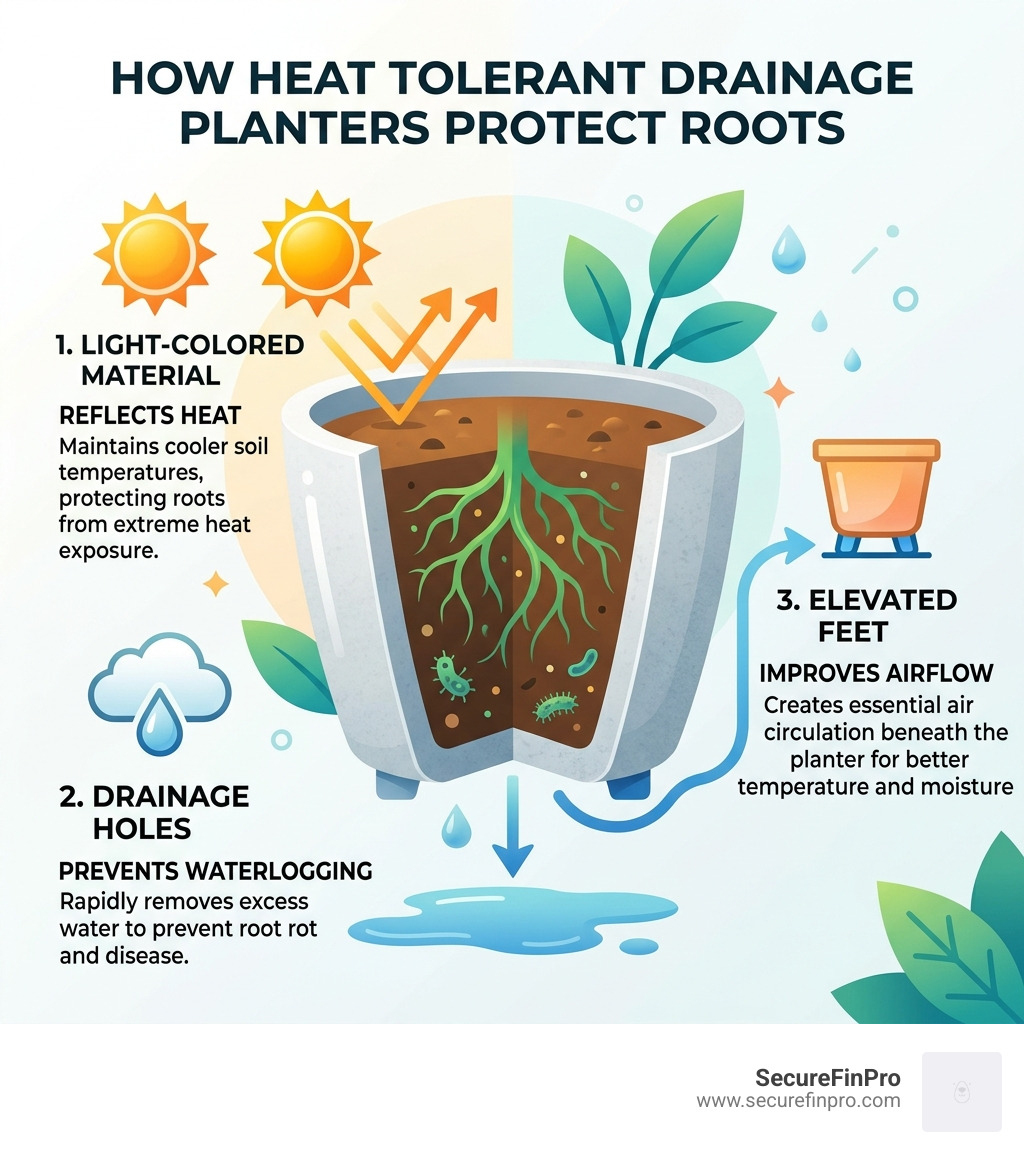
Heat tolerant drainage planters are outdoor containers built to handle intense sun and high temperatures without cooking your plant’s roots — and they’re designed to drain excess water fast so roots never sit in soggy soil.
If you’re in a hurry, here’s what to look for:
| Feature | Why It Matters |
|---|---|
| Drainage holes | Prevents root rot in waterlogged soil |
| Light-colored or non-porous material | Reduces heat absorption at the root zone |
| Larger container size | Holds more moisture between waterings |
| Elevated feet | Improves airflow and drainage clearance |
| UV-resistant material | Stops cracking and fading in direct sun |
Most planters fail in summer heat for one of two reasons: they trap too much heat, or they trap too much water. Often both.
Research shows that root-zone temperatures inside black plastic containers can exceed 104°F for five to ten hours a day in full sun — and sustained exposure at that level impairs growth, kills beneficial soil microbes, and makes plants far more vulnerable to disease.
Meanwhile, poor drainage creates a second problem. Roots sitting in waterlogged soil can’t get oxygen. In heat, that speeds up root rot dramatically.
The good news? Choosing the right planter fixes both problems at once. The sections below break down exactly what to look for — materials, size, drainage systems, and plant pairings — so you can build a container garden that actually thrives when temperatures spike.
Why Material Choice Matters for Heat Tolerant Drainage Planters
When we talk about heat tolerant drainage planters, the material isn’t just about aesthetics; it’s about thermodynamics. Some materials act like insulators, protecting roots from the “oven effect,” while others act like conductors, piping heat directly into the soil.

The Science of Root Cooling
The root zone is the most sensitive part of your plant. While leaves can often handle high ambient temperatures through transpiration, roots are used to the buffered, cool temperatures of the earth. Research from HO-119: Reducing Heat Stress to Container-Grown Plants indicates that direct root injury occurs between 113°F and 130°F, but even chronic exposure to 104°F impairs photosynthesis and nutrient uptake.
Unglazed ceramic and terracotta are champions of “evaporative cooling.” Because the material is porous, moisture wicks through the walls and evaporates on the outside. This process can lower soil temperatures by 3–5°C compared to non-porous materials like concrete. However, this means the soil dries out faster, so you have to balance cooling with more frequent watering.
Conversely, concrete has high thermal mass. It takes a long time to heat up, but once it does, it holds onto that heat long into the night. To make the most of this material, we recommend checking out our concrete-planters-for-succulents-a-diy-guide to ensure you’re using the right mix for durability.
| Material | Thermal Property | Heat Performance |
|---|---|---|
| Unglazed Ceramic | High Porosity | Excellent (Evaporative cooling) |
| Resin/LLDPE | Non-conductive | Good (Does not transfer heat easily) |
| Fiberglass | Insulating | Excellent (Maintains structural integrity) |
| Concrete | High Thermal Mass | Fair (Holds heat longer once warmed) |
| Metal | High Conductivity | Variable (Requires light colors/insulation) |
Durable Metals and Stone Composites
Modern heat tolerant drainage planters often use composites to get the “best of both worlds.” For example, some planters are made from volcanic ash (like LavaStone) mixed with resin over a fiberglass frame. This creates a vessel that looks like heavy stone but is lightweight and frost-proof.
Metal planters, particularly Corten steel, are popular for their architectural look. While metal conducts heat, thick-walled or insulated metal planters perform surprisingly well. Corten steel develops a protective patina that reflects a portion of solar radiation. For high-performance metal planters, we often suggest using internal insulation liners (like XPS 300) to create a thermal barrier between the hot metal and the sensitive roots.
Essential Features for High-Temperature Performance
A planter without drainage isn’t a planter; it’s a bucket. In high heat, drainage becomes even more critical because plants need more water, but they also need more oxygen.
The Role of Size in Heat Tolerant Drainage Planters
Size matters more than you might think. Larger potting vessels hold a greater volume of soil, which acts as a thermal buffer. A small 6-inch pot can reach 110°F in an hour of direct sun, whereas a large 24-inch planter might only see a 10-degree rise over the same period.
Larger containers also hold more moisture. This hydration buffer is essential during heatwaves when evaporation rates are at their peak. For those looking to build their own, our a-rock-solid-guide-to-heavy-base-drainage-for-succulents offers great tips on how to structure the bottom of large pots for maximum efficiency.
Advanced Drainage and Irrigation Systems
If you can’t water your plants twice a day during a July scorcher, look for planters with self-watering reservoirs. These systems use a “false bottom” to hold a water reserve. Through capillary action or wicking, the soil stays consistently moist without being waterlogged.
For sustainable gardening, some homeowners are now using “downspout planters.” These are large-scale heat tolerant drainage planters (often holding up to 78 gallons) designed to catch stormwater from your roof. They are filled with specialized soil and native plants that can handle both a deluge of rain and the intense heat of a summer afternoon.
Best Plants for Your Heat Tolerant Drainage Planters
Even the best planter can’t save a plant that isn’t built for the sun. To create a successful container garden, you need to match your high-performance drainage with high-performance greenery.
Designing Stunning Heat Tolerant Drainage Planters
When we design these planters, we love the “Thriller, Filler, Spiller” method:
- The Thriller (Height): Use heat-loving architectural plants like Hibiscus, Mandevilla vines, or Canna Lilies.
- The Filler (Bulk): Lantana and Lavender are incredible here. Lantana, in particular, is nearly “bulletproof” in the heat and attracts butterflies. Lavender loves the sharp drainage provided by these pots.
- The Spiller (Drape): Fan flowers (Scaevola) or trailing succulents like “Elephant Bush” work beautifully.
If you’re working on a budget, take a look at our budget-friendly-diy-succulent-planters guide. Succulents like Echeveria and “Hens and Chicks” are the gold standard for heat tolerance, provided they have the excellent drainage these planters offer. For indoor transitions, our guide on the best-containers-for-indoor-gardens can help you choose pots that look great in the sunroom too.
Top Plant Picks for Full Sun:
- Lantana: Thrives in heat; requires watering only once a week once established.
- Coneflowers (Echinacea): Perennials that need at least a 2-gallon pot and full sun.
- Lavender: Mediterranean native that prefers drying out between waterings.
- Catmint: Attracts pollinators and exudes a pleasant lemony-mint scent.
Expert Care Tips for Summer Container Success
Maintenance changes when the mercury rises. Even the best heat tolerant drainage planters require a bit of human help to stay lush.
- Morning Irrigation: Water early in the morning (before 8:00 AM). This allows the plant to hydrate before the peak heat hits and reduces water loss through evaporation.
- Mulching: Add a 1.5 cm layer of light-colored mulch (like crushed oyster shells or light pebbles) to the soil surface. This can keep soil temperatures up to 10°F cooler.
- Epsom Salt Secret: For ferns and leafy tropicals, a tablespoon of Epsom salts per gallon of water every 4–6 weeks can keep foliage lush and green even in sweltering humidity.
- Deadheading: Regularly remove faded flowers. This prevents the plant from “going to seed” and encourages it to keep blooming through the summer.
For more indoor-specific care, check out our updated resource on the best-containers-for-indoor-gardens-2 to ensure your year-round plants stay healthy.
Frequently Asked Questions about Heat-Resistant Planters
Can metal planters be used in full sun without overheating?
Yes, but with caveats. We recommend choosing light-colored powder coatings (like white, beige, or light gray) which reflect solar radiation. Using a planter with an internal liner or double-walled construction provides the necessary insulation to protect roots from the metal’s high thermal conductivity.
How do I prevent my planters from cracking in extreme weather?
Cracking is rarely about the temperature itself; it’s about water expansion and “thermal shock.” Ensure your drainage holes are never blocked. If water can’t escape, it expands when it gets hot (and freezes in winter), putting immense pressure on the planter walls. Elevating your pots on “pot feet” or gravel helps moisture escape and allows air to circulate underneath.
Why is drainage more important during a heatwave?
When soil is hot, the oxygen levels in the water drop. If the water is stagnant (poor drainage), the roots literally suffocate. Good drainage allows fresh, oxygen-rich water to pull through the soil, cooling the roots and preventing the buildup of salts from fertilizers, which can “burn” plants more easily in high heat.
Conclusion
At SecureFinPro, we believe that gardening shouldn’t be a battle against the elements. By investing in high-quality heat tolerant drainage planters, you aren’t just buying a pot; you’re buying insurance for your plants. Whether you choose the evaporative cooling of unglazed ceramic, the thermal mass of concrete, or the high-tech insulation of resin and fiberglass, the key is to prioritize root health and moisture management.
Sustainable gardening starts with the right foundation. By matching drought-tolerant natives with well-draining, heat-resistant vessels, you can enjoy a vibrant patio all summer long without the constant worry of wilting.
Explore our complete guide to succulent care for more expert tips.
